
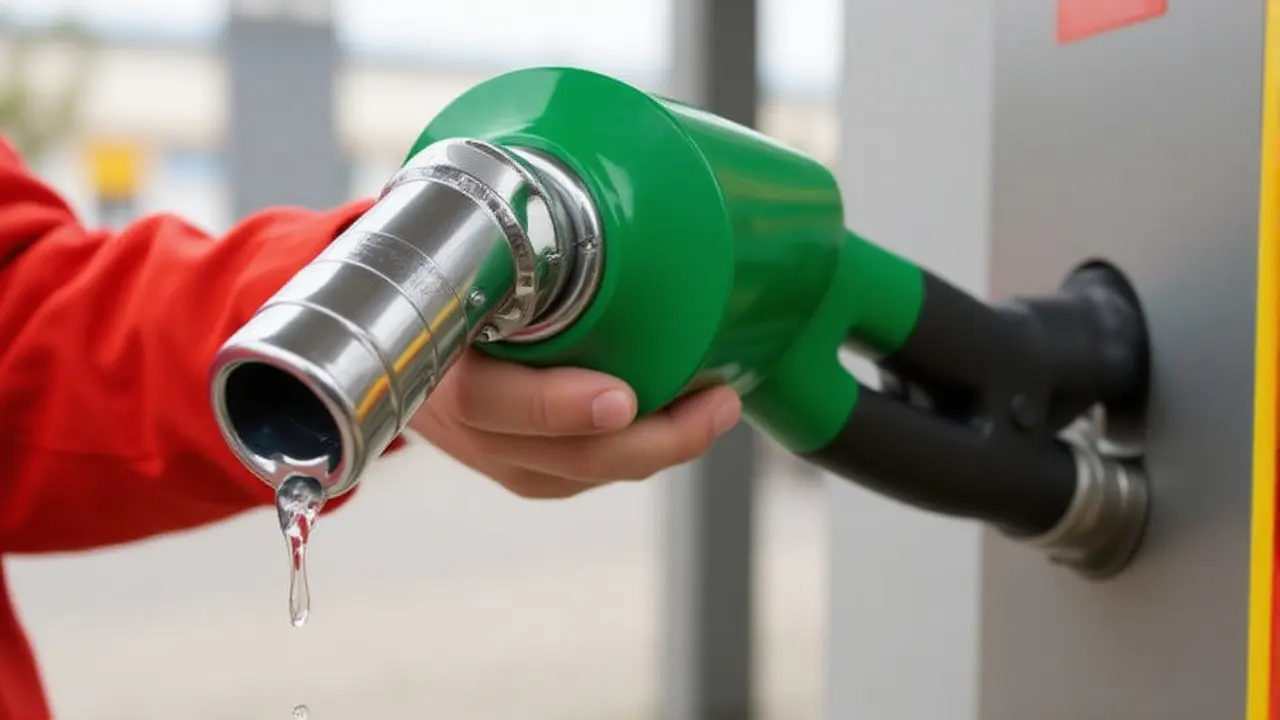
The Trump administration has stepped in with emergency fuel relief measures this Wednesday as gasoline prices creep toward $4 per gallon. With global energy markets under immense strain due to the ongoing war in Iran, the federal government is attempting to blunt the blow for commuters. The immediate move involves a regulatory waiver that allows the sale of E15 gasoline—a blend containing 15% ethanol—from May 1, 2026, through May 20, 2026. It's a temporary fix for a systemic problem, and the administration has already signaled they might extend the window if pump prices don't stabilize.
Here's the thing: usually, federal air pollution rules block the sale of E15 during the summer months. By tossing those restrictions aside, the government hopes to introduce a slightly cheaper alternative to the standard pump options. Lee Zeldin, Administrator of the Environmental Protection Agency, framed the move as a way to cut "unnecessary costs and uncertainty" for American drivers. But while the announcement sounds promising, the actual impact on your wallet might be smaller than the headlines suggest.
- E15 Window: May 1 to May 20, 2026 (potential for extension).
- Price Spike: Regular gas in Cleveland, Ohio, jumped over $1 in under 20 days.
- Oil Reserve: 172 million barrels released from the Strategic Petroleum Reserve.
- Tax Proposal: Proposed suspension of the 18.4 cents-per-gallon federal gas tax.
- Availability: E15 is available at fewer than 5% of U.S. gas stations.
The Reality Check on E15 Availability
Turns out, the E15 waiver might be more of a symbolic gesture than a practical solution. Patrick De Haan, who leads petroleum analysis at GasBuddy, warns that this measure will have "virtually no impact" on the price of regular gasoline. The main issue? Most gas stations aren't equipped to sell it. According to De Haan, fewer than 5 percent of stations nationwide even offer the blend.
While John Thune, a Senator from South Dakota, argues that E15 can save nearly $0.60 per gallon, he admits it isn't a magic bullet. He noted that while it eases the pain at the pump, it doesn't fix the underlying problem: the desperate need to get U.S. oil production back in the game and address the global supply shortage. (It's a bit like putting a bandage on a broken leg; it helps a little, but the bone is still snapped.)
A Legislative Push for Tax Relief
While the EPA handles the blends, some lawmakers are eyeing the tax code. On April 27, 2026, Richard Blumenthal (D-Connecticut) and Mark Kelly (D-Arizona) introduced the Gas Prices Relief Act of 2026. This isn't just about ethanol; it's about a temporary suspension of the 18.4 cents-per-gallon federal gasoline tax through October 1, 2026.
The goal is to put cash directly back into the pockets of people who rely on their cars for work and school. To prevent oil companies from simply pocketing the difference, the bill directs the Department of the Treasury to monitor the program and ensure savings actually reach the consumers. To keep the roads from crumbling during this tax holiday, the legislation requires the Treasury to transfer funds from the general fund to the Highway Trust Fund.
The stakes are high. According to the National Federation of Independent Business (NFIB), the current federal excise tax sits at 18.3 cents for gas and 24.3 cents for diesel. With Chris Pappas (D-New Hampshire) preparing a companion bill in the House, there is a real push to see if the legislative branch can provide more relief than the regulatory one.
Global Tension and the 'Hormuz Bottleneck'
Why is this happening now? The catalyst is the conflict in Iran, which has severely disrupted the flow of oil through the Strait of Hormuz. This narrow waterway is the world's most important oil transit chokepoint. When it's threatened, global prices skyrocket almost instantly. In Cleveland, Ohio, the effect was brutal: regular gasoline averaged $3.98 per gallon—a full dollar higher than just a month prior.
The administration has thrown everything at the wall to see what sticks. Beyond the E15 waiver, they've released 172 million barrels from the Strategic Petroleum Reserve and even waived the Jones Act to let foreign ships move fuel within U.S. waters. Oddly enough, they've also approved the purchase of Russian oil that was already at sea, showing a level of pragmatism driven by desperation to keep the economy from stalling.
The Economic Toll on American Families
The numbers are sobering. Researchers from Stanford University estimate that the typical U.S. family will pay an extra $68 in April 2026 alone. Looking at the bigger picture, those costs are expected to snowball into approximately $740 in additional expenses over the remainder of the calendar year. For a middle-class family, that's a significant hit to the monthly budget.
But wait, is there a silver lining? The EPA has also removed federal barriers to E10 sales nationwide. This expands the options for consumers, though again, the savings are incremental. The real question remains whether these domestic tweaks can offset the volatility of a war-torn global market.
Frequently Asked Questions
What exactly is E15 gasoline and why is it usually banned in summer?
E15 is a fuel blend containing 15% ethanol and 85% gasoline. It's typically restricted during the summer because higher ethanol content can contribute to increased smog and air pollution when temperatures rise, violating the Clean Air Act standards that the EPA is tasked with enforcing.
Will I see E15 at my local gas station?
Probably not. According to GasBuddy, fewer than 5% of gas stations in the U.S. are currently equipped to sell E15. While the waiver makes it legal to sell, it doesn't force stations to install the necessary infrastructure to provide it.
How does the Gas Prices Relief Act of 2026 work?
The proposed act would suspend the federal gasoline tax of 18.4 cents per gallon until October 1, 2026. Unlike the EPA waiver, this would potentially lower prices at every single pump in the country, provided the Treasury Department ensures oil companies pass the savings to drivers.
Why are the wars in Iran affecting gas prices in the U.S.?
The conflict disrupts the Strait of Hormuz, a critical artery for global oil shipments. When oil flow is impeded, the global supply drops, causing prices to spike worldwide, which then trickles down to local pumps in cities like Cleveland and beyond.
What other measures is the government taking besides the E15 waiver?
The administration has released 172 million barrels of oil from the Strategic Petroleum Reserve, waived the Jones Act to allow foreign vessels to transport fuel domestically, and approved the purchase of Russian oil already in transit to stabilize supply.

April 29, 2026 AT 20:59
Follow the money. It's not about the pumps, it's about the corn lobby getting a payday under the guise of an emergency. The "Hormuz Bottleneck" is just the convenient boogeyman for this cycle. Classic move to keep us distracted while they play with the reserve barrels like it's a game of Tetris.

April 30, 2026 AT 00:07
The sheer audacity of thinking a temporary blend waiver solves a systemic collapse of energy logic is simply breathtaking 🤌✨. We are witnessing the death of strategic planning in real-time. It's a tragicomedy of errors 🎭.

May 1, 2026 AT 19:30
it must be so stresful for families right now. $740 extra a year is a huge hit for anyone just tryin to get by. hope things get better soon for evryone 😔

May 3, 2026 AT 02:15
It is honestly laughable that people think a federal tax suspension is the primary answer when the real issue is the utter lack of domestic energy independence which we should have secured decades ago regardless of what the current administration claims to be doing because the global market is a fickle beast and relying on the Strait of Hormuz is basically inviting a crisis 🙄. Maybe if we stopped catering to international sensibilities and just drilled everything in sight we wouldn't be begging for 18 cents of relief from the government in the first place 🇺🇸.

May 3, 2026 AT 06:35
The tax relief act seems like a much more inclusive way to help everyone rather than just those near a specific type of gas station. It's a more practical approach for the average worker.

May 5, 2026 AT 03:56
We have to remember that these spikes are temporary. If we keep a level head and support each other through the budget crunch, we'll get through it. Just focus on what you can control in your daily spending.

May 5, 2026 AT 22:41
Why are we even talking about E15? It's a joke. This whole policy is an embarrassment to the nation. Just give us the tax cut and stop the pretend environmentalism during a crisis!

May 6, 2026 AT 21:44
The synergy between the geopolitical instability and the fuel-grade volatility is just a symptom of the larger systemic glitch in the matrix. They're using these regulatory levers to mask the inflation pivot. It's all about the liquidity and the supply chain nodes. Totally fake news that this helps the poor.

May 7, 2026 AT 20:08
One must contemplate the morality of prioritizing short-term economic relief over long-term environmental stewardship. While the burden on the citizen is great, the ethical imperative remains to protect the atmosphere for future generations.

May 8, 2026 AT 10:40
Let's stay positive! Even small wins like E10 expansion can help a bit. We can find ways to carpool and help our neighbors out until this blows over. We've got this!

May 10, 2026 AT 09:30
Price is a phantom. We chase the number at the pump while ignoring the void of our own dependence on machines. The fuel is just a mirror of our collective instability.





April 29, 2026 AT 15:40
Oh wow, a 20-day window for E15. Absolutely groundbreaking. 🙄 Truly a masterclass in doing absolutely nothing while pretending to save the day. I'm sure the 5% of people who can actually find this stuff are just thrilled.