
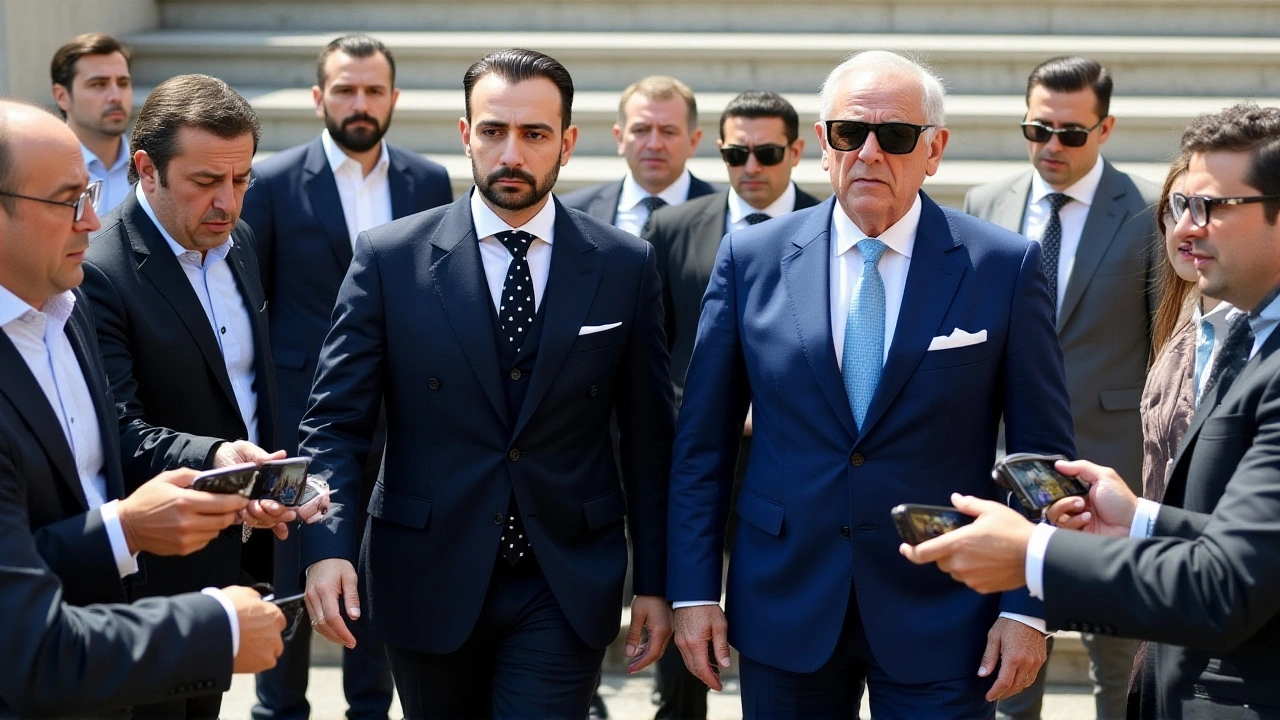
When Luciano Spalletti walked into the post-match press room at Stadio Diego Armando Maradona on Sunday night, the air was thick with frustration — not just from Napoli fans, but from the very supporters who once cheered him as Juventus’ tactical architect. His team had just lost 2-1, and the blame was being pinned squarely on his decision to start 19-year-old Kenan Yıldız as a lone center-forward, a role he’d never played before, and then sub him off just 15 minutes after he scored Juventus’ only goal. Spalletti didn’t flinch. He didn’t apologize. He defended — fiercely.
‘He’s Not a Striker, But We Needed Him There’
The absence of Dušan Vlahović, sidelined for at least three months after emergency surgery for a torn muscle, forced Spalletti’s hand. Instead of starting Lois Openda, the €45-50 million summer signing, or Jonathan David, the Canadian international, he turned to Yıldız — a player known for his dribbling, vision, and pace on the wing. The idea? To confuse Napoli’s three-man backline by having Yıldız drop deep, pull defenders out of position, and create space for Francisco Conceição and Weston McKennie to surge forward. It looked good on paper. In practice? It didn’t work.
"The idea was to get the forwards playing between the three Napoli defenders," Spalletti said. "But Yıldız always had someone on his back. He couldn’t express himself. We weren’t good enough at putting him in the right conditions to deliver." And yet, he scored. A brilliant, instinctive finish in the 54th minute, curling past Alex Meret after a slick one-two with Conceição. It was the kind of moment that reminds you why Yıldız is considered Italy’s brightest teenage talent. But Spalletti pulled him off in the 76th minute. The crowd gasped. Analysts lost their minds.
"You Were Asking When I’d Rest Him — Now I’m Playing Openda"
When pressed on the substitution, Spalletti’s tone shifted. He didn’t just defend — he pushed back.
"A week ago, you were asking me when I would give Kenan Yıldız a rest," he said, his voice rising slightly. "Today I introduced Openda — a player who Juventus paid €45-50 million for. He has to play too. Yıldız scored and can give us a great deal, but if the team needs those sudden moments of magic and intuitions, then he too needs to increase his contribution."
It was a pointed jab — not just at the media, but at the club’s ownership, whose expectations are now heavier than ever. Openda, who came on for Yıldız, was largely anonymous. David, introduced at halftime, sparked a noticeable improvement. Yıldız, moved to the left wing, looked more like himself — darting, dangerous, unpredictable. "We played better once Jonathan David was introduced," Spalletti admitted. "And Yıldız moved into his more traditional wide left position."
That’s the twist: the team only came alive when they stopped trying to force Yıldız into a role he wasn’t built for. The experiment failed. The solution was obvious — and it came too late.
"We Were Passengers" — Locatelli and the Midfield Collapse
Manuel Locatelli, Juventus’ captain and midfield anchor, didn’t mince words. "The boss asked us to pass more, to dominate the midfield. We made mistakes — simple passes. We need to show what we can do out there."
Spalletti’s assessment was even harsher. "We were passengers," he told reporters, echoing the headline from Football Italia. "Napoli made us chase them."
For 45 minutes, Juventus looked lost. Napoli controlled the tempo, pressed high, and exploited the space left by Yıldız’s isolated positioning. The midfield trio of Locatelli, Manuel Bellerín, and Adrien Rabiot failed to break Napoli’s compact lines. When they did get the ball, they rushed passes. When they didn’t, they panicked.
"We took control after we scored but we played it safe," Spalletti added. "We didn’t look for that extra something. We lost the ball too much. If you don’t grab control, you end up playing the opposition’s game."
It’s a familiar refrain. Juventus have spent the last two seasons chasing the ghost of their past dominance. Now, they’re chasing Napoli — who moved into second place with 32 points — and still trail leaders Inter Milan by eight points. The gap isn’t just in points. It’s in belief.
Fan Fury and the Napoli Tattoo
It wasn’t just the tactics that angered Juventus fans. It was the timing. The context. The tattoo.
Spalletti, 65, has a large, faded image of Naples on his left forearm — a tribute to the city where he once managed and where his son was born. For years, it was seen as a sentimental gesture. Now, it’s being weaponized. "He still loves Napoli," read the headline on Tribuna.com, a sentiment echoed across fan forums and social media. "Why are we letting him play like this?"
Blackwhitereadallover.com captured the moment perfectly: "Spalletti quickly abandoned the experiment in the second half and Juve played measurably better — not that that was a high bar — and equalized." The subtext? He knew it was wrong. He just waited too long to fix it.
What’s Next? Bologna, Pressure, and a Team in Transition
On December 15, 2025, Juventus host Bologna FC 1909 at Allianz Stadium in Turin. The stakes? Higher than ever. With Vlahović out until March, the attack is in chaos. Openda hasn’t clicked. David is still finding his rhythm. Yıldız is caught between youth and responsibility.
Spalletti’s future isn’t in immediate danger — not yet. But the clock is ticking. Every loss, every questionable substitution, every defensive lapse chips away at his authority. And the fans? They’re no longer just asking for results. They’re asking for identity.
Frequently Asked Questions
Why did Spalletti start Kenan Yıldız as a center-forward?
With Dušan Vlahović sidelined for three months after surgery, Spalletti had no natural striker. He tried using Yıldız’s movement and technical ability to disrupt Napoli’s back three, hoping he’d draw defenders and create space for Conceição and McKennie. But Yıldız had never played centrally before, and Napoli’s physical marking neutralized his strengths. The tactic backfired — until he was moved to the wing at halftime.
Why was Yıldız subbed off after scoring?
Spalletti claimed he wanted to introduce Lois Openda, the club’s expensive summer signing, to justify the investment. But the move was widely seen as a tactical misstep — Yıldız had just given Juventus the lead, and his energy and unpredictability were their best attacking weapon. The substitution removed that spark, and Juventus struggled to create chances after.
How did Juventus perform after introducing Jonathan David?
Juventus improved significantly after David came on at halftime. The team became more fluid, pressing higher and moving the ball quicker. Yıldız, moved to the left wing, looked more dangerous and connected better with the midfield. The change proved that the problem wasn’t Yıldız — it was the position he was forced into.
What does this loss mean for Juventus’ title hopes?
Juventus now sit fourth with 28 points, eight behind leaders Inter Milan. With Vlahović out until March and inconsistent performances from their attack, they’re unlikely to challenge for the Scudetto unless they fix their midfield control and find a reliable striker. Every point lost now makes the gap harder to close.
Is Spalletti under threat of being sacked?
Not immediately. Spalletti still has support from the board, and his long-term project is seen as viable. But if Juventus lose to Bologna and fail to win their next three matches, pressure will mount significantly. The Napoli tattoo and the tactical confusion have turned his leadership into a talking point — and not in a good way.
Who should start up front for Juventus next against Bologna?
The smartest move would be to start Jonathan David as the central striker, with Yıldız on the left and Openda as a backup option. David’s movement and link-up play suit Juventus’ system better than a forced false nine. Yıldız’s natural width should be exploited, not suppressed. Spalletti needs to stop overthinking — and start trusting his best assets.

December 11, 2025 AT 23:44
bro yildiz is pure magic when he’s on the wing. he’s not a target man. he’s a dancer. putting him up front was like asking a ballet dancer to play rugby. the moment they moved him left? boom. life returned to the team. spalletti just needed to trust what he’s got instead of overcomplicating it

December 13, 2025 AT 18:28
Let me be clear: this isn’t about tactics. It’s about institutional decay. Juventus, once a titan of European football, now outsources intelligence to TikTok analysts and hires coaches who tattoo their ex-clubs on their forearms. Yıldız was never the problem. The system is broken.

December 14, 2025 AT 20:36
Spalletti’s Napoli tattoo is not sentimental-it’s treason! He’s a traitor in a blazer! Juventus paid €50M for Openda and he played 14 minutes?! That’s not coaching-that’s financial sabotage! And don’t even get me started on the midfield! Locatelli looked like a man who forgot his own name!

December 15, 2025 AT 19:05
wait so yildiz scored and then got subbed off for openda who did nothing? that makes zero sense. i get wanting to play your expensive signing but you don’t pull your only spark just because you spent money on someone else. also-did anyone else notice how much better the team was when david came on? that’s the real answer right there

December 17, 2025 AT 13:34
look i get why people are mad but let’s not forget yildiz is 19. he’s learning. spalletti was trying something bold. yeah it flopped. but the fact that he even tried? that’s leadership. the real issue is the midfield. they were asleep. if the midfield doesn’t wake up, no striker in the world will save this season

December 17, 2025 AT 13:50
there’s a lesson here beyond football. sometimes you have to let the young one shine even if it doesn’t fit the textbook. we rush to label things as ‘mistakes’ when really we’re just scared of change. yildiz’s goal was pure instinct. maybe the system needs to bend to his talent, not the other way around.

December 19, 2025 AT 01:02
From a systems theory perspective, the introduction of Yıldız as a false nine created an emergent structural imbalance in the attacking third, which, when compounded by the lack of vertical passing lanes from the midfield trio, resulted in a collapse of spatial cohesion. The subsequent substitution of David, who possesses superior off-the-ball movement and interplay mechanics, restored functional equilibrium to the offensive unit. Spalletti’s delayed recognition of this dynamic reflects a common organizational inertia in high-stakes tactical environments.

December 20, 2025 AT 12:41
obviously the answer is david. why are we even having this conversation? yildiz is a winger. openda is a flop. spalletti is confused. the tattoo is a red flag. this isn’t rocket science. stop overthinking. put david up front and let yildiz run at people. done.

December 22, 2025 AT 07:28
This is all a distraction. The real story? Juventus is being sabotaged by the same elite circles that control Serie A. Why else would Spalletti-known for his loyalty-be forced to use a foreign striker while his own academy kid gets benched? The tattoo? A setup. The loss? A message. The board? Compromised. They don’t want Juventus to win. They want chaos.

December 23, 2025 AT 06:59
man i just wanna say yildiz is gonna be a legend one day. he’s got that spark, you know? the kind that makes you stand up and yell even if your team’s losing. spalletti messed up the position but not the kid. give him space, let him breathe, and watch him burn the league down. also… maybe stop making him play like a center forward? just saying

December 23, 2025 AT 08:38
bro yildiz was lit on the wing after the subs. why did we even try this? just let the kid be himself. openda? he’s been sleeping since he arrived. david? he’s the real deal. spalletti needs to stop overcooking the meal. simple = better. trust your players. they know what to do

December 24, 2025 AT 07:31
spalletti: ‘we were passengers’ - yes. and you’re the driver who forgot how to turn the wheel. also, the tattoo? cute. but if your loyalty’s split, maybe your coaching should be too.

December 26, 2025 AT 06:40
the team improved after david came on. that’s all that matters. yildiz was never meant to be a striker. the experiment was doomed from the start. spalletti knew it. he just waited too long to admit it.

December 27, 2025 AT 19:11
Let me say this clearly: the loss was not a failure of tactics-it was a failure of nerve. Spalletti hesitated. He feared the backlash. He feared the fans. He feared the money. But football isn’t played in boardrooms-it’s played in the gut. And Yıldız had the gut. The rest of the team? They were just waiting for someone to lead them. Someone brave. Someone who wasn’t afraid to be wrong.

December 29, 2025 AT 02:24
Respected Sir, I must respectfully submit that the tactical deployment of Mr. Yıldız as a central forward, while unconventional, demonstrates a commendable willingness to innovate within the constraints of injury adversity. However, the delayed substitution of Mr. Openda, coupled with the underutilization of Mr. David, suggests a possible misalignment between managerial intent and operational execution. Furthermore, the symbolic presence of the Napoli tattoo may, in certain cultural contexts, be perceived as a conflict of allegiance, thereby undermining institutional cohesion.

December 29, 2025 AT 23:12
Can we just take a moment to appreciate that the only time Juventus played like a team was when they stopped trying to force a square peg into a round hole? Spalletti’s ego didn’t lose the game-his refusal to adapt did.

December 30, 2025 AT 23:48
Spalletti’s tattoo is a metaphor: he’s in love with Napoli, so he’s slowly killing Juventus with kindness. Yıldız? A pawn. Openda? A liability. David? The only adult in the room. And the fans? They’re just waiting for the next betrayal.

December 31, 2025 AT 06:42
man i just wanna say-yildiz is gonna be okay. he’s got that spark. the team just needed to let him breathe. spalletti’s got time. the players just need clarity. let him play wide. let david lead. stop overthinking. football’s supposed to be fun.

December 31, 2025 AT 12:06
This is not merely a tactical misstep. It is a moral failure. Juventus, a club built on discipline and legacy, has entrusted its future to a man who openly venerates its rival. The substitution of Yıldız-after scoring-is not just illogical; it is a betrayal of youth, of potential, of everything this club once stood for. The tattoo is not sentimental. It is symbolic. And the board? They are complicit.


December 10, 2025 AT 05:41
okay but why did spalletti think a 19yo winger could just magically become a striker?? like i get the injury crisis but this wasnt innovation this was desperation with a side of ego