
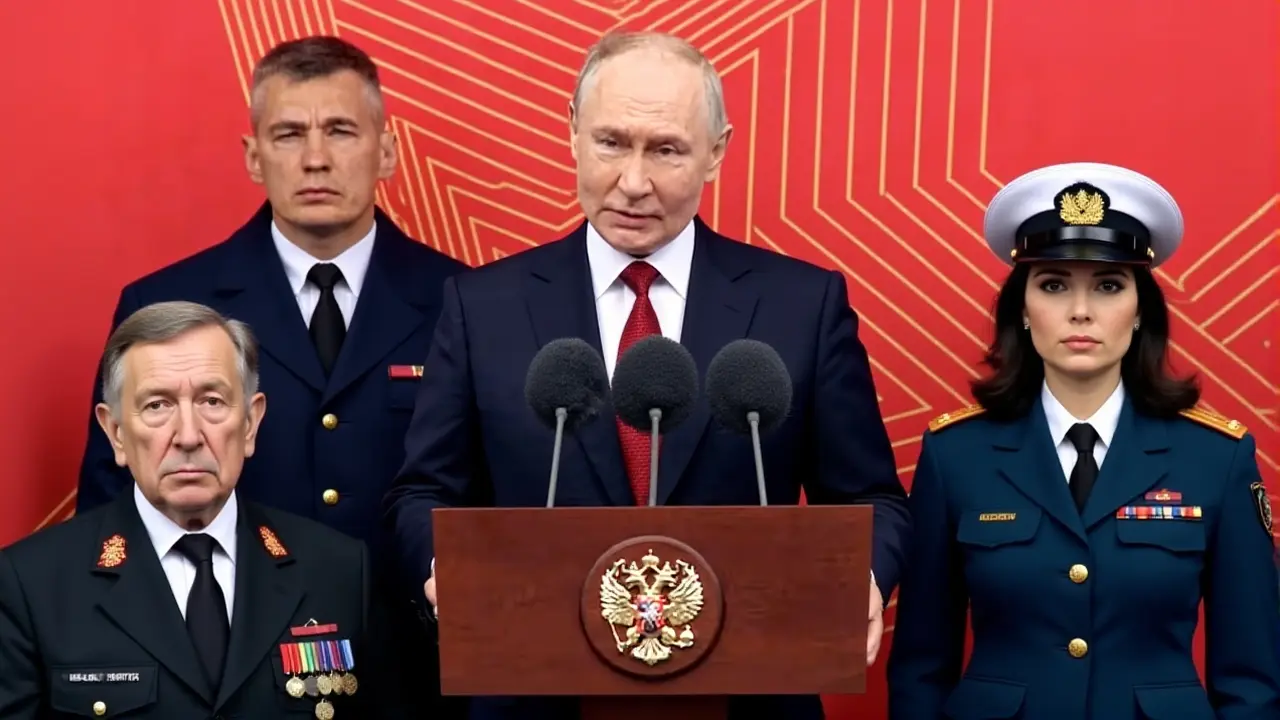
When Vladimir Putin, President of Russia, told reporters on Saturday that the Ukraine conflict is "coming to an end," the statement landed with a mix of relief and deep skepticism. It was May 10, 2026, in Moscow, right after Victory Day celebrations. The twist? This declaration didn't come from a battlefield victory, but from a diplomatic breakthrough brokered by Donald Trump, President of the United States.
The timing is deliberate. The three-day ceasefire runs from Saturday through Monday, May 11, 2026. It’s designed to coincide with Victory Day commemorations. But this isn’t just about symbolism. It includes a massive prisoner exchange: 1,000 soldiers from each side. That’s 2,000 people going home in one go. For families who have waited years for news, it’s a lifeline.
A Ceasefire Born of Diplomacy
Here’s how it happened. President Trump announced the deal via Truth Social. He said he personally requested the suspension of hostilities. "This ceasefire will include a suspension of all kinetic activity, and also a prisoner swap of 1,000 prisoners from each country," Trump wrote. He added that both Vladimir Putin and Volodymyr Zelenskyy, President of Ukraine agreed to his request.
Zelenskyy confirmed the details. "A ceasefire regime must also be established on May 9, 10, and 11," he stated. He noted that Ukraine is working consistently to bring its people home from Russian captivity. His team has been instructed to prepare everything necessary for the exchange promptly. The Ukrainian president framed this not as a surrender, but as a humanitarian necessity.
But there’s a shadow hanging over the deal. The Russian Ministry of Defense issued warnings during negotiations. They hinted at possible retaliatory attacks on Kyiv if security guarantees aren’t met. Moscow even asked Washington to help ensure the safety of the Russian embassy in the Ukrainian capital. It’s a stark reminder: trust is thin on the ground.
The Symbolism of Red Square
The backdrop for Putin’s comments was significant. On Red Square, he oversaw a military parade commemorating the Soviet Union’s defeat of Nazi Germany. Oddly enough, heavy weapons were absent. It was the first time in nearly two decades that tanks and missiles didn’t roll through the square. Analysts see this as a signal—a de-escalation posture, perhaps, or a way to show the world Russia is ready for peace talks.
Putin used the moment to criticize Western powers. He accused "globalist elites" of arming Ukraine with the goal of breaking up Russia. His rhetoric hasn’t changed much since February 24, 2022. Back then, he launched what he called a "special military operation." He cited Article 51 of the UN Charter—self-defense. He claimed Ukraine was committing genocide against Russian speakers in Donetsk and Luhansk. Those claims remain unverified by international bodies.
Five Years of Conflict
Let’s put this in perspective. The full-scale invasion began four years ago. In 2022, Putin promised "demilitarization and denazification." He denied plans to occupy land. Today, millions are displaced. Cities lie in ruins. The war is in its fifth year. Casualties number in the hundreds of thousands on both sides. Economic sanctions have reshaped global trade. Energy markets are still volatile.
This ceasefire is the most significant pause in months. But is it a prelude to peace? Or just a tactical break? Experts are divided. Some say the prisoner exchange builds goodwill. Others warn that without a formal treaty, fighting will resume. The stakes couldn’t be higher.
What This Means for Families
For the 1,000 Ukrainian soldiers returning home, it’s a miracle. For the 1,000 Russian POWs going back, it’s uncertain. Many fear punishment upon return. Human rights groups are monitoring the process closely. They want transparency. They want assurances that no one is tortured or disappeared. The logistics alone are complex. Transport routes need to be secured. Medical care must be available. Every detail matters.
Ukrainian officials have emphasized speed. Zelenskyy’s team is preparing reception centers. Volunteers are organizing supplies. There’s a sense of cautious optimism. But everyone knows this could collapse quickly. One stray missile, one misinterpreted move, and the fragile truce shatters.
Broader Implications
This deal changes the diplomatic landscape. The U.S. is playing a central role again. Trump’s direct involvement marks a shift from previous administrations. Whether this approach lasts remains to be seen. Europe watches nervously. NATO allies want stability but fear appeasement. China observes quietly. Global South nations call for lasting peace.
The economic impact is immediate. Markets reacted positively to the news. Oil prices dipped slightly. Defense stocks fluctuated. Investors are betting on de-escalation. But caution prevails. No one expects permanent peace yet. Sanctions remain in place. Rebuilding costs are astronomical. Estimates run into the hundreds of billions.
What’s Next?
The next 72 hours are critical. If the ceasefire holds, more talks may follow. If it breaks, we’re back to square one. Both sides have incentives to comply. Soldiers need rest. Civilians need safety. Leaders need breathing room. But history shows us that pauses often lead to renewed fighting.
Watch for these developments:
- Confirmation of prisoner transfers
- Statements from front-line commanders
- Reactions from European capitals
- Evidence of continued artillery fire
Background context matters here. Since 2014, tensions have simmered. The annexation of Crimea started it. Then came Donbas. Now, the entire country is embroiled. Each phase brought new atrocities. Each negotiation failed until now. This time feels different. Maybe because the cost is too high for anyone to win outright.
Frequently Asked Questions
How does this affect ordinary citizens in Ukraine and Russia?
For civilians, the ceasefire means temporary safety. Less shelling, fewer casualties, and a chance to rebuild homes. Families receive loved ones back from captivity. However, infrastructure damage remains severe. Power grids are still fragile. Food supplies face disruptions. Long-term recovery depends on sustained peace.
Who negotiated this ceasefire agreement?
The deal was brokered by U.S. President Donald Trump. He directly contacted both Vladimir Putin and Volodymyr Zelenskyy. Trump announced the terms via Truth Social, stating he requested the suspension of kinetic activity. Both leaders accepted the proposal, which includes a 1,000-for-1,000 prisoner exchange.
Why did Putin claim the war is ending?
Putin made the statement during Victory Day remarks in Moscow. He likely aims to project confidence and encourage domestic support. Internationally, it signals openness to diplomacy. However, his claims of "denazification" goals remain contested. Many experts view this as rhetorical positioning rather than concrete policy change.
What risks threaten the ceasefire's success?
Several factors could derail the truce. Miscommunication between military units might trigger accidental clashes. Hardline factions within either government may oppose concessions. Verification mechanisms are weak. Without independent monitors, violations go unnoticed. Trust deficits make compliance difficult for both sides.
How many prisoners are being exchanged?
The agreement specifies 1,000 prisoners from each side, totaling 2,000 individuals. This represents the largest single exchange since the conflict began. Logistics involve transport corridors, medical screening, and family reunification protocols. Humanitarian organizations are assisting with coordination efforts.

May 13, 2026 AT 18:43
Don't you see the deeper pattern? This isn't about peace, it's about control. The timing with Victory Day is too perfect, too orchestrated. They want us to believe in a narrative while the real machinery grinds on in the shadows. Truth Social was used because traditional media is compromised. The globalist elites mentioned by Putin are actually the ones pulling the strings from behind the scenes. We are all pawns in a game we don't understand.

May 14, 2026 AT 08:22
I really hope this brings some light into such a dark situation! Let's focus on the positive outcome for the families who get their loved ones back. Every single person returning home is a victory for humanity. We should celebrate these small steps towards healing. Keep the energy positive and supportive!

May 15, 2026 AT 01:54
Sure, let's pretend this means anything other than a tactical pause. You people are so naive. Trump didn't do this out of kindness; he did it for his poll numbers and to look like a dealmaker. Putin doesn't care about your feelings or your 'humanitarian necessity.' He cares about leverage. Wake up.

May 15, 2026 AT 19:39
It is interesting to observe how different perspectives emerge during times of crisis. Some see manipulation, others see hope. Perhaps the truth lies in acknowledging both the strategic interests and the genuine desire for relief among the soldiers and civilians. We can learn from this moment to better understand the complexities of conflict resolution.

May 17, 2026 AT 09:11
Oh my gosh!!! I am literally shaking reading this!! The sheer weight of 2000 lives changing in an instant is overwhelming!!! Can you imagine the emotions?! The tears!!! The hugs!!! It is beautiful and terrifying all at once!!! Please keep them safe!!! :((((( ))))))

May 17, 2026 AT 18:32
One must consider the broader implications carefully. While the immediate humanitarian benefit is clear, the long-term stability remains uncertain. It is crucial to monitor the adherence to the terms strictly. Any deviation could have severe consequences. We need to remain vigilant yet hopeful.

May 17, 2026 AT 22:31
From a cultural standpoint, the absence of heavy weaponry in Red Square is a significant signal. It suggests a shift in posture that goes beyond mere rhetoric. However, one must also acknowledge the historical context of such displays. Diplomacy often requires such symbolic gestures to pave the way for substantive talks.

May 19, 2026 AT 12:27
Stop overcomplicating it. Prisoners go home. That is good. Do not ruin it with conspiracy theories or philosophical debates. Just appreciate the fact that people are coming back alive.

May 20, 2026 AT 04:30
the emotional toll on these families is unimaginable i hope they find comfort in each other now

May 20, 2026 AT 22:32
How optimistic of you to think this will last. History shows us otherwise. But I suppose blind faith is easier than critical analysis. Enjoy the temporary silence while it lasts.

May 21, 2026 AT 08:51
Just watching from the sidelines. Seems like everyone has a strong opinion already. Let's see if the next 72 hours hold up before we declare winners or losers.

May 22, 2026 AT 13:12
they say its peace but i know its just another layer of deception wrapped in pretty words why bother analyzing when the truth is hidden underneath everything feels so fake and manufactured

May 23, 2026 AT 11:52
We should be grateful for any reduction in suffering. To criticize the effort is to ignore the value of life. Let us support the process and hope for the best outcome for all involved parties.

May 24, 2026 AT 20:28
The logistical complexity of moving 2000 prisoners through active conflict zones is staggering. Most people don't realize the sheer operational headache this creates. Medical screening, transport security, family reunification protocols-it’s a nightmare for coordinators. And yet, here we are, expecting it to work perfectly.

May 25, 2026 AT 17:37
You're all missing the point entirely. This isn't about the prisoners; it's about the power dynamic. Trump inserted himself as the indispensable mediator. Putin allows it to gain legitimacy. Zelenskyy accepts it out of desperation. It's a toxic triangle of ego and survival. None of you understand the underlying psychology.

May 12, 2026 AT 08:19
The moral fabric of international relations is being tested here, not just the military might. When we look at the prisoner exchange, we are looking at a restoration of human dignity that has been stripped away by geopolitical gamesmanship. It is essential to recognize that peace is not merely the absence of war but the presence of justice. If this ceasefire leads to a genuine resolution, it must be built on ethical foundations rather than temporary convenience. The world watches with bated breath, hoping for a precedent that values life over ideology.